

Image: Printful
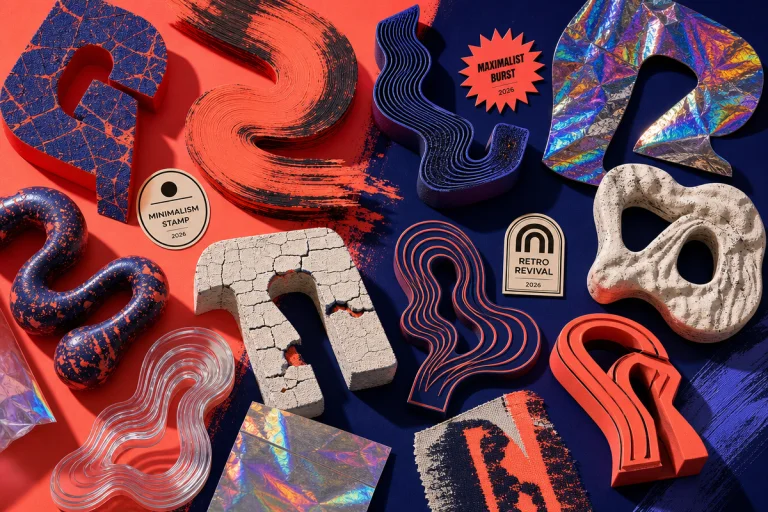
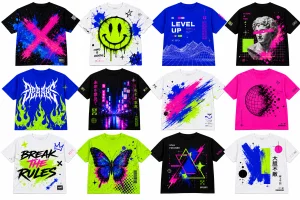
Scroll through any streetwear corner of Instagram right now and something hits you immediately: the blank tee is dead. In its place – hand-rendered illustrations, washed-out vintage type, bold social messaging, and enough custom artwork to fill a Soho gallery. We’re watching t-shirt design trends 2026 take shape in real time, and what’s emerging is chaotic, confident, and commercially very interesting for indie print-on-demand creators.
This isn’t a single-trend cycle. Printful has mapped out 56 distinct design directions for 2026 [citation needed] – fifty-six – which tells you everything you need to know about where the market is heading. Not a monoculture. A sprawl. And inside that sprawl is serious opportunity for creators who can read the signals early.
How the T-Shirt Became the Most Loaded Canvas in Fashion
Image: Printful
The tee was always a statement piece, but something shifted in the past two to three years. In 2025, custom artwork became the fastest-growing segment in the custom t-shirt printing market – one that’s projected to nearly double from $5.16 billion in 2024 to $9.82 billion by 2030, according to Printful’s market analysis. Consumers stopped buying blank prestige and started treating their clothing as a wearable billboard – for their values, their humour, their niche obsessions, their subcultures.
Think Supreme drops meets Redbubble, but with actual taste. The gatekeeping collapsed. You no longer needed a brand co-sign to make a t-shirt that resonated; you needed a strong point of view and a file formatted for print.
What accelerated this was the convergence of two forces: the rise of AI design tools that put professional-grade visuals in the hands of anyone with a laptop, and the zero-inventory model of print-on-demand. POD sellers could now test twenty different aesthetics in a week without warehousing a single unit. That feedback loop – rapid iteration, real sales data, no waste – rewired how the market discovers what actually sells.
T-Shirt Design Trends 2026: The Aesthetics We’re Watching
With 56 distinct design directions on the table, the question isn’t “what’s trending” – it’s “which cluster do you want to own?”
Three broad aesthetic currents are dominating 2026.
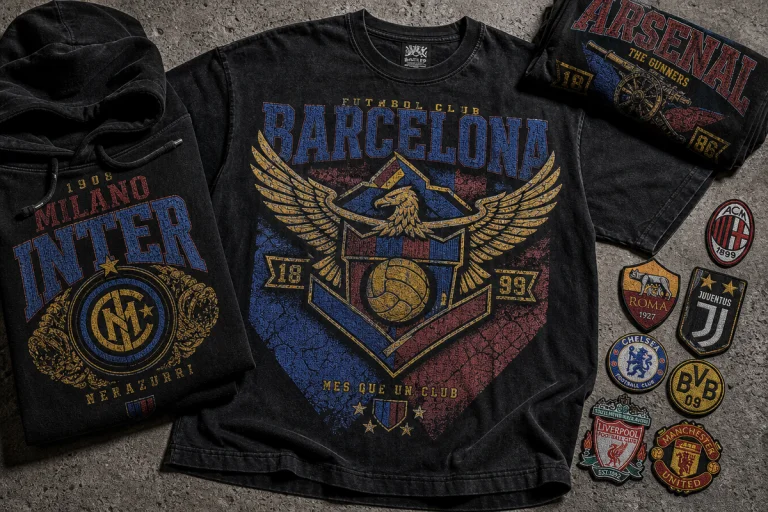
Nostalgia hardware. Faded collegiate fonts, bootleg logo treatments, distressed screen-print textures. Think your favourite band’s 1994 tour merch, but for a band that never existed. The execution: a heavyweight 100% cotton tee – 6.1oz or heavier – with a cracked plastisol ink effect and a deliberately off-centre left-chest print. For type, reach for condensed slab-serifs or display grotesques with intentional wear built into the artwork: uneven baselines, tight tracking, one ink colour that reads like it’s been washed seventy times. Base colour in warm ecru or faded bone; print in maroon, forest green, or washed navy. The buyer is 25-to-40, disposable income, nostalgia as primary currency.
Community identity graphics. Gym culture, gaming references, pet portraits, niche hobby badges. The gaming industry sits at roughly $300 billion globally, and that community buys merch like it’s a second language. A bold geometric sans – think Eurostile or something tight and condensed – reading “GRINDING SINCE 2018” with pixelated accent work hits the gym niche and the gaming niche simultaneously. Two audiences, one SKU. For gym-specific designs, lean into oversized back prints with a small repeated logo motif on the sleeve: a placement borrowed directly from premium athletic brands but accessible via DTF printing, which handles fine detail and colour gradients without the setup cost of traditional screen-printing.
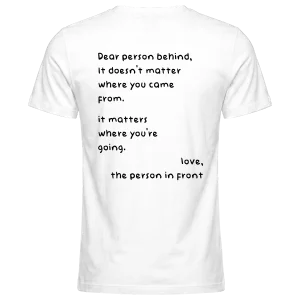
Cause-led design. Mental health messaging, environmental calls, social solidarity prints. This resonates hardest with younger demographics who treat their wardrobe as an extension of their identity politics. The visual language here is almost protest-poster: stark Helvetica Neue or Akzidenz-Grotesk, a single colour accent, nothing decorative. White tee, black ink, one line of text centred at the chest with generous breathing room above and below. That’s the entire brief. Simplicity is the statement.
For AI-assisted design, tools like those covered in our guide to Midjourney Styles + ChatGPT: The Ultimate AI Editorial Design System are making it faster than ever to generate on-trend visuals that match these aesthetics without hiring an illustrator.
Print Techniques Worth Knowing in 2026
The execution method changes the feel as much as the artwork does. DTF (direct-to-film) transfers have democratised complex, multi-colour artwork – gradients, fine line work, photographic textures – that would have required expensive screen setups a few years back. For the vintage aesthetic specifically, Printful’s guide to faking an aged look points to three levers: fabric choice (100% cotton absorbs ink differently to blends, giving a more authentically uneven result), overlapping halftone layers in your artwork file, and intentional colour separation gaps that mimic real registration drift from worn screen-print plates. You can age a design convincingly before it ever touches a garment.
More Trend-to-SKU Translations
The niches worth doubling down on also include food and drink humour – evergreen, because people never stop wanting a tee that makes their mates laugh – and pet and animal lovers, where emotional attachment drives impulse purchases and repeat buying. For the pet niche, the winning formula is a bold, slightly cartoonised portrait in a loose brush-ink style with a short comic caption in a rounded display font underneath. Printed full-front on soft-wash jersey. Buyers gift these. That’s the mechanic that makes the niche durable.
If you’re working the gaming-meets-Y2K crossover – and you should be looking at it – the visual grammar is chunky rounded letterforms, blown-out neon colourways, the loading-screen palette of 2003. Pair pixel-art references with ironic retro typography and you’re speaking fluently to a demographic that grew up with both references simultaneously.
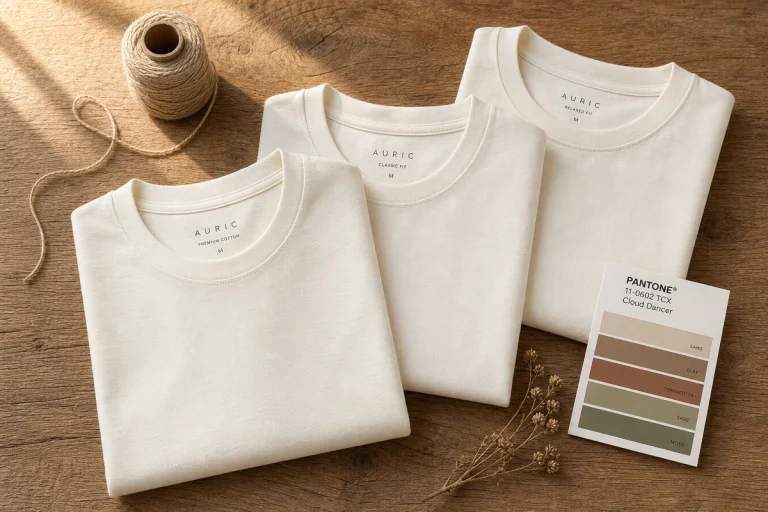
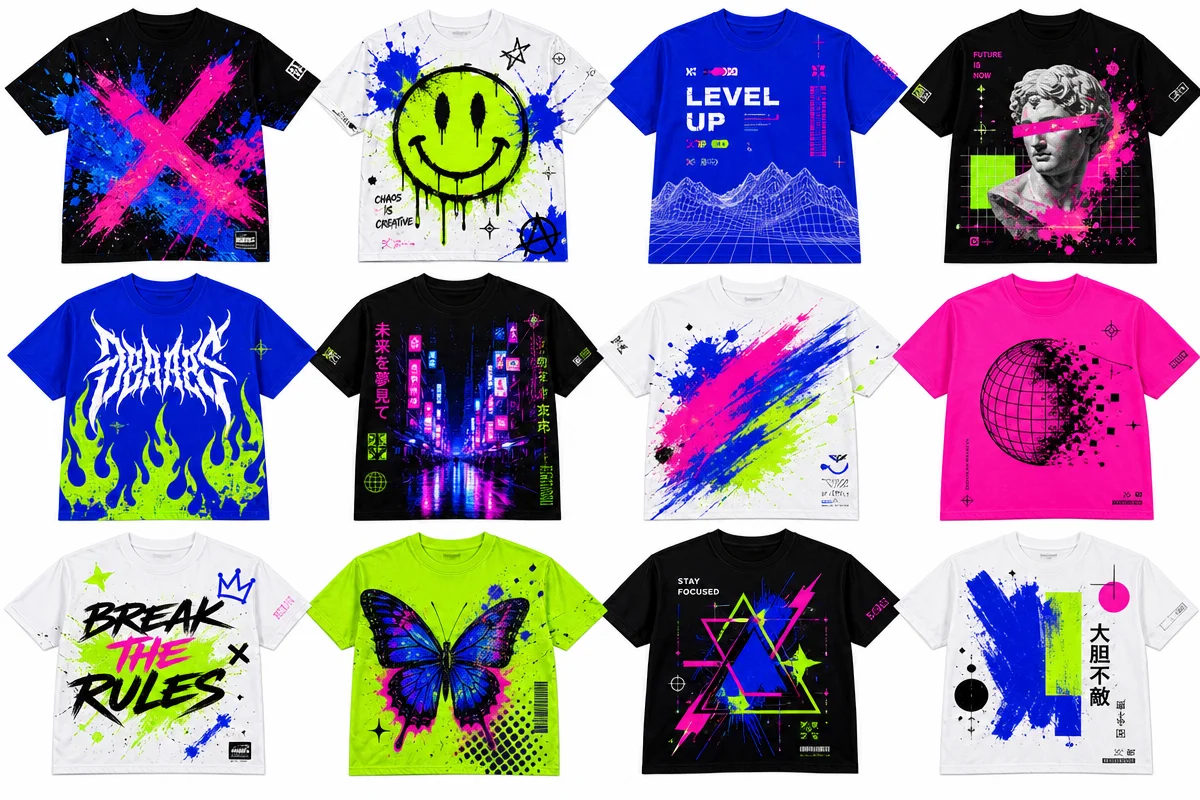
Colour palettes running hot right now: earthy terracottas and warm off-whites, dusty sage and moss, alongside high-contrast black-on-black tonal prints for the premium-adjacent tier. On the bolder end – cobalt blues, burnt oranges, and acid greens lifted straight from the streetwear style outfits & accessories circulating across urban feeds.
What POD Creators Should Actually Do With This
The strategic move isn’t chasing all 56 directions. It’s picking two or three adjacent niches and developing a coherent visual language across them. If you’re doing gym culture, run nostalgic sports typography alongside a cleaner motivational text range. If you’re doing gaming, pair pixel-art references with ironic Y2K type. The market in 2026 rewards specificity. Broad doesn’t sell. Niche sells.
Use AI fashion prompts to mock up colourways and composition variations before committing to a listing. The feedback loop from digital prototype to published SKU can now be measured in hours, not weeks.
Back to that Instagram scroll we started with. What you’re actually watching isn’t chaos – it’s the market speaking in fifty-six dialects at once. The creators who win aren’t the ones who shout loudest. They’re the ones who pick one dialect, speak it fluently, and build an audience that recognises them at a glance.
That’s the 2026 playbook. Distinct, specific, printable.
Frequently Asked Questions
Q: What are the biggest t-shirt design trends in 2026?
A: Three clusters dominate: nostalgia-driven bootleg and collegiate graphics with cracked inks and off-centre placements, community identity prints for gym, gaming, and pet niches, and stripped-back cause-led messaging with protest-poster typography. Printful’s research maps 56 distinct directions for the year, pointing to deep aesthetic diversification rather than a single dominant look.
Q: Which print technique works best for a vintage look without distressing the actual garment?
A: DTF transfers handle fine detail and colour gradients without screen-printing costs. For a convincingly aged result, start with 100% cotton (it absorbs ink more unevenly than blends), layer halftone overlays and intentional colour separation gaps into your artwork file, and choose off-white or bone as your base rather than bright white. The ageing happens in the design stage, not on the garment.
Q: What placement and type choices are selling best in 2026?
A: Off-centre left-chest prints and oversized back graphics are performing strongly across niches. For type: condensed slab-serifs with distressed texture sell the vintage look; geometric sans-serifs like Eurostile read as gym or gaming; stark centred Helvetica carries cause-led messaging without clutter. Placement and typeface together do as much work as the artwork itself – get both right before you test anything.
Q: What colour palettes are trending for t-shirts in 2026?
A: Earthy terracottas, warm off-whites, dusty sage, and moss tones dominate the mid-market. Streetwear-adjacent designs are leaning into cobalt blue, burnt orange, and acid green. High-contrast tonal black-on-black prints are gaining traction in the premium tier where the garment quality does the talking.
Q: How do I choose a POD niche when there are so many design directions?
A: Pick two or three adjacent niches and build a coherent visual language across them rather than scattering across styles. Gym and gaming share bold sans-serif energy and work well together. Pet and food humour share impulse-gift purchase mechanics. Depth in a niche beats surface coverage across many. Use AI mockup tools to test colourways and compositions before listing – digital prototyping costs nothing and gives you real directional data fast.
Source: https://www.printful.com/blog/t-shirt-design-ideas
This article was researched and written with AI assistance, then reviewed for accuracy and quality. Maya at Its.That. uses AI tools to help produce content faster while maintaining editorial standards.