


\n
Last updated: June 19, 2026
\n
 \n
\n
\nImage: Milan Fashion Campus
\n
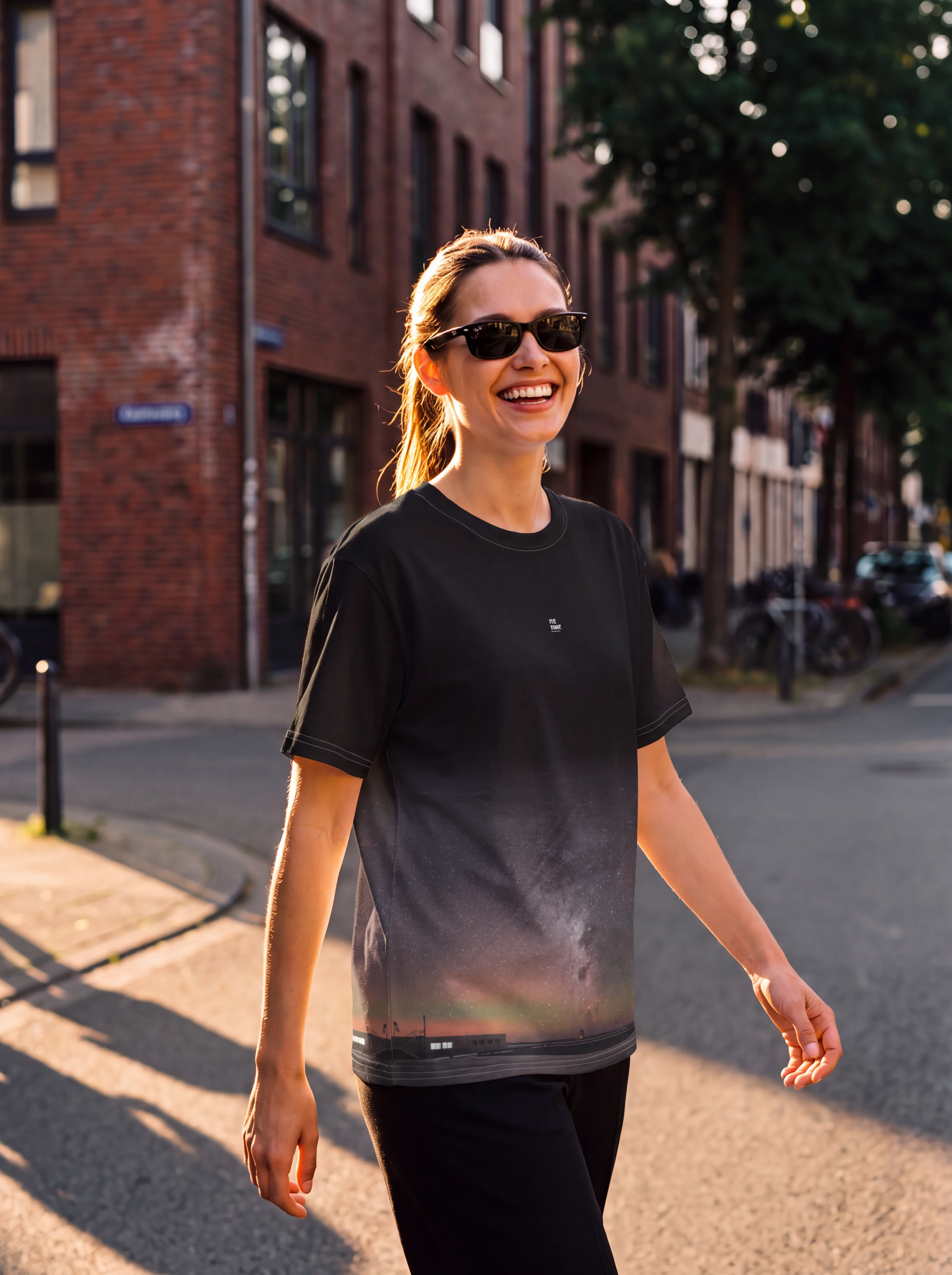
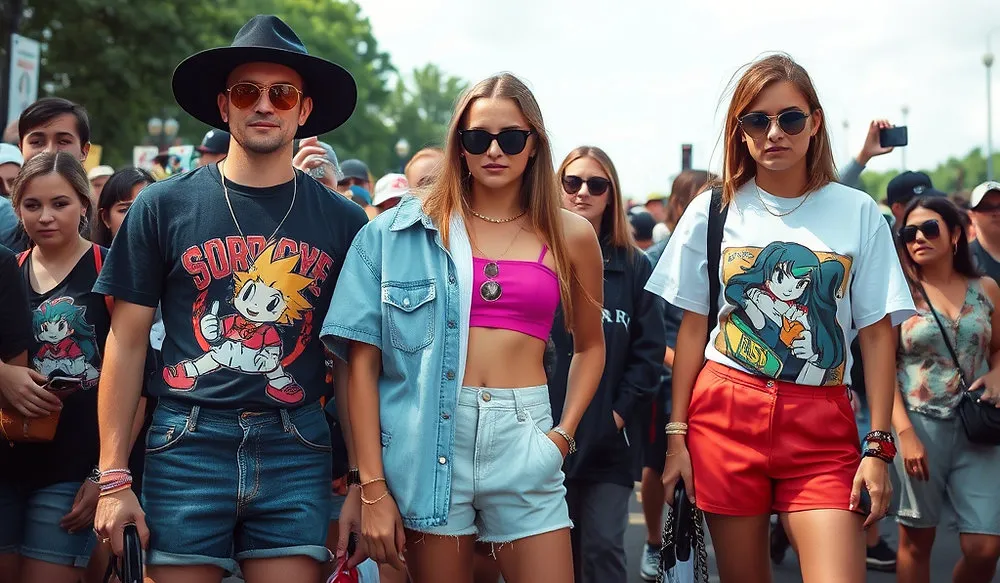
Saturday morning, Brick Lane. A kid in a triple-XL tee printed with what looks like a bootleg racing league logo – all off-register ink and sun-bleached orange – is filming himself for the FYP, the exact energy we chase with our own Bootleg tees. His mate is in a boxy khaki crewneck with a blown-out gothic typeface across the chest that reads “LOCAL FOREVER.” Neither of them is thinking about fashion. They are thinking about the shot. That gap – between what the fashion press tells us is happening and what is actually being worn, filmed, and reposted to 4.5 billion feeds – is exactly where our opportunity lives.
\n
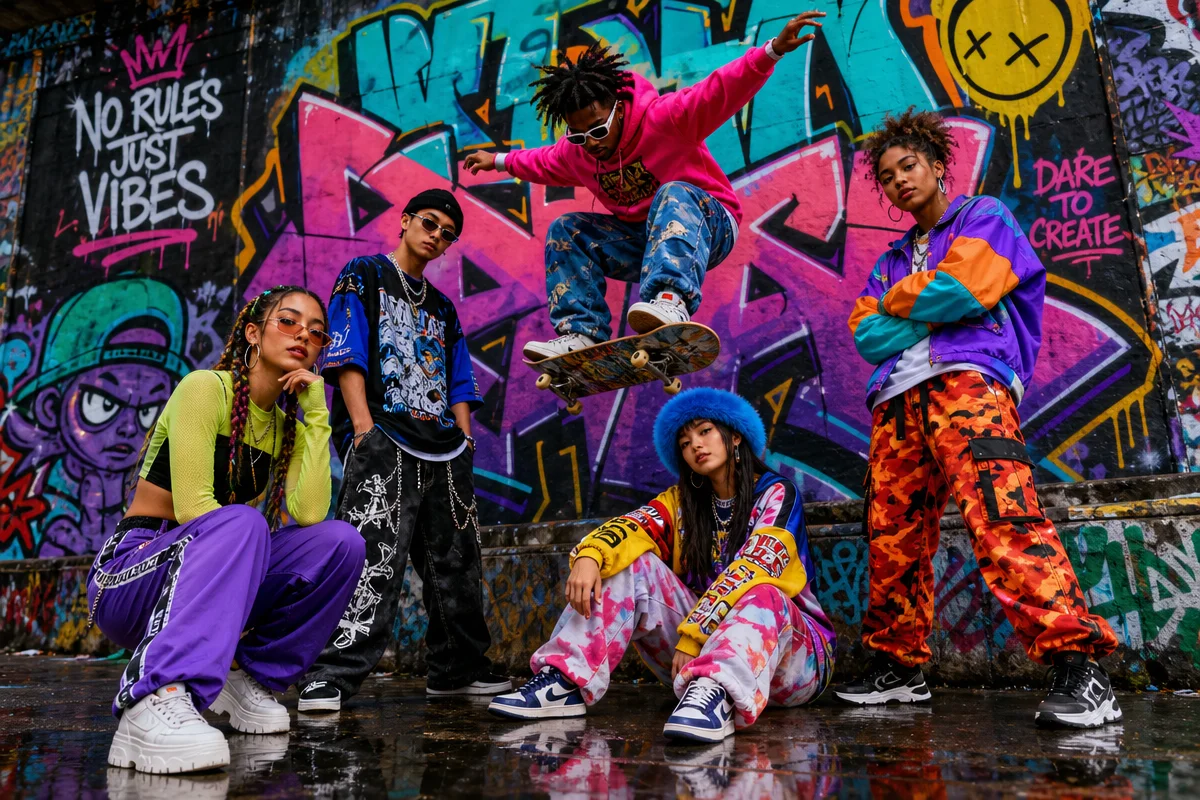
Gen Z streetwear trends are not simply evolving – they are dismantling the entire hierarchy that once separated “real” fashion from what kids wore to the skate park. And for those of us designing print-on-demand t-shirts, there has never been a more electrifying moment to pay attention.
\n
This is not about casual dressing. It never was.
\n
1. Gen Z Streetwear Trends Start With the Silhouette
\n
 \n
\n
\nImage: Milan Fashion Campus
\n
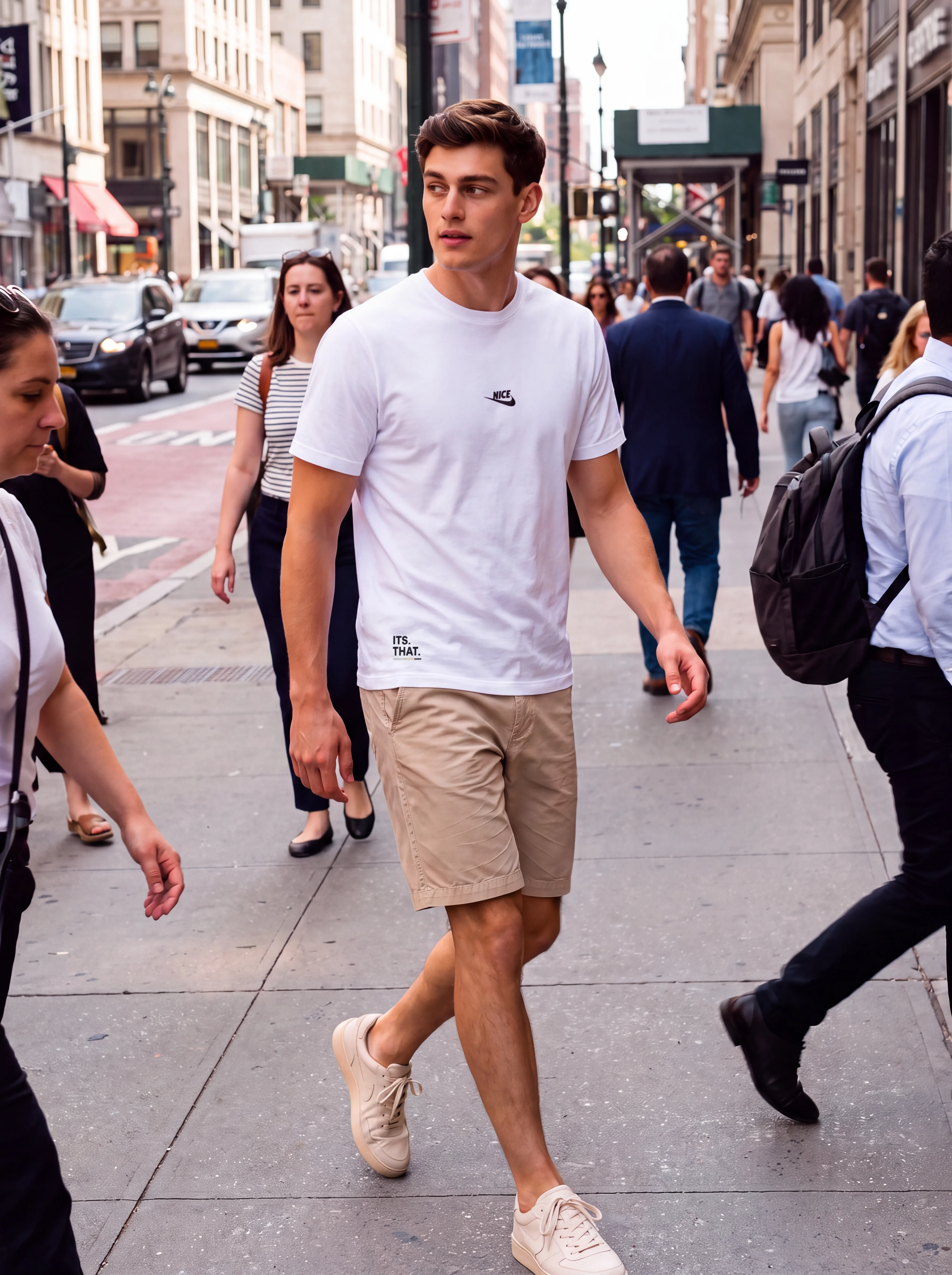
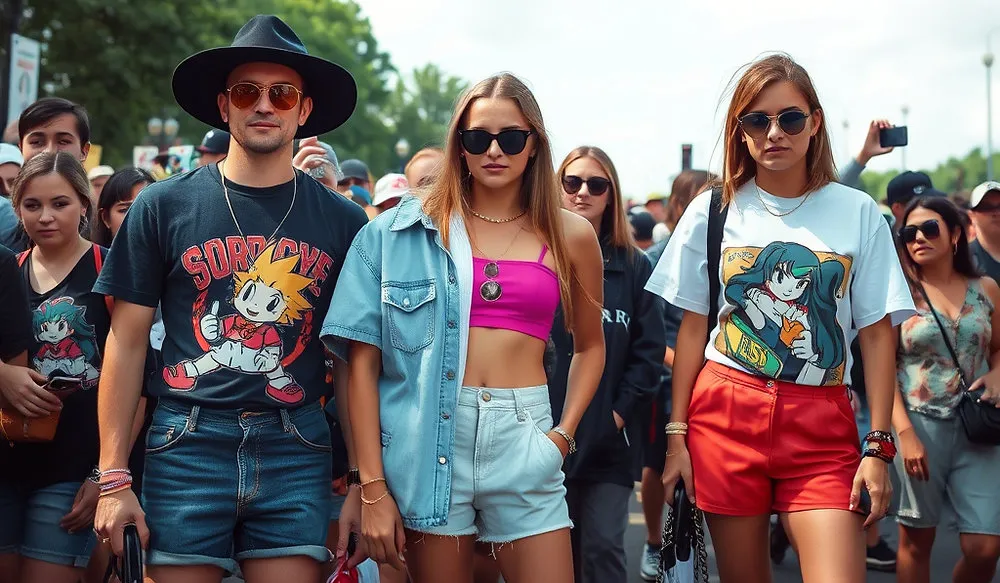
The oversized silhouette is the single biggest signal on the street right now. Not “relaxed fit” – oversized. Proportions that swallow the body, drop shoulders that hang past the arm, hems that graze the thigh. Think Yeezy-era Kanye meets your dad’s forgotten 1993 football jersey. Think South Indian film poster meets North London market stall. The cultural wires are being crossed deliberately, and the results are everywhere.
\n
This is not laziness. It is a deliberate rejection of the body-con, status-signalling fits that defined millennial dressing. Gen Z wears volume as armour – clothes that say “I am not here to be evaluated.” For print-on-demand, this silhouette is a gift. A 500-gram heavyweight tee with a boxy cut is not just comfortable – it is the canvas.
\n
Tee translation: Go 500g heavyweight, boxy cut, sized up one. Front-and-centre chest graphic with deliberate negative space – do not crowd the print. A single bold element lands harder than any busy all-over design. Think distorted face, washed-out slogan, or vintage-style crest sitting dead centre. Palette: bone white base, rust ink, washed black garment. Let the fabric breathe. That is the whole brief.
\n
2. Bootleg Aesthetics and the Remix Culture
\n
Counterfeit logos, unofficial merchandise, pirate branding – Gen Z has taken the bootleg aesthetic and turned it into high-concept art. Think thrift-store NASCAR meets luxury minimalism. Think Off-White’s quotation marks scaled to a screen-printed chest hit. Think the wave of bootleg Harley-Davidson shirts reselling for triple retail [citation needed]. The joke is the point. The knowing wink at brand culture is the entire message.
\n
There is a reason LA Apparel’s blank tags have developed cult folklore on TikTok [citation needed] – people are not buying for the graphic any more. They are buying for the story behind the object, for the perceived authenticity, for the sense that someone got there first. Gen Z did not grow up buying into brand mythology – they grew up sampling, remixing, and mashing it back together. Wearing a fake-looking logo tee is not about deception. It is about demonstrating fluency in the visual language of capitalism while refusing to play it straight.
\n
Tee translation: Distressed typefaces on 400g garment-dyed stock in washed black, faded army green, or rust. Off-register printing effects. Over-inked bleed edges, placement that feels slightly wrong – deliberately. Type that looks almost right but does not quite sit still. Pair with a chest logo that reads like a real brand from 1987 but definitely is not. This is where graphic design trends in 2026 and streetwear converge completely – analogue imperfection over digital polish, every time.
\n
3. Typography Is Having Its Most Interesting Moment in Years
\n
This deserves its own section because right now, typography is not a supporting element – it is the design. Three distinct directions are running simultaneously, and all three translate directly to tees.
\n
Gothic and blackletter are back – hard. Not heritage-safe Old English. Blown out, distorted, sometimes barely legible. Think Motorhead merch crossed with a Bavarian beer hall sign, rendered at 72pt, bleeding off the hem. On a boxy tee in a dark colourway, this reads as simultaneously aggressive and archival. It taps the same cultural memory as early rap merch and hardcore zines. Pair with a washed black or dark navy heavyweight, oversized fit, minimal back print.
\n
Blown-out sans is the other major direction. Helvetica stretched to breaking point. Condensed display fonts pushed past their optical limits. Words that fill the entire chest panel. Think ACNE Studios meets a 1970s protest placard. The trick is palette restraint – one colour, maximum contrast, nothing competing. White on black. Black on bone. Red on washed olive. Single declarative phrase. No decoration.
\n
Airbrush lettering is the third signal, and it is moving fast. Gradient fills, soft-focus drop shadows, the visual language of custom van art and fairground signage absorbed into premium streetwear. Think thrift-store Floridian tourism tee meets Virgil Abloh’s colour blocking. Palette leans pastel-adjacent: sky blue fading to cream, coral dissolving into white. On a vintage-washed garment, this reads nostalgic and considered rather than kitsch. Do not overcomplicate the placement – centre chest, let the type do the work.
\n
4. Gender-Neutral Styling as Default Mode
\n
Gen Z does not style around gender – it styles around feel. The fastest-growing segment of streetwear right now is pieces that were never designed with a specific gender in mind, or that deliberately cross-reference both. Boxy tees worn by everyone. Baggy cargos pulled from the men’s section by women. Sheer layering pieces thrown over hoodies by men.
\n
This is not a trend that is going to reverse. It reflects broader social change – the generation that grew up with gender as a spectrum is simply dressing accordingly. Top streetwear brands in 2026 are releasing unisex-first collections because they understand where the consumer is going. Luxury houses are scrambling because their entire category structure was built on gendered lines.
\n
Tee translation: Avoid gendered imagery entirely. Lean into universal symbols – nature, geography, numbers, abstract forms, slogans that read across any context. It is the same instinct behind our own Nature collection, real photography rather than illustration, and our Positivity backprint quotes for the slogan side. Typography-led tees perform extremely well here. Think blown-out sans-serif, single declarative phrase – “NOTHING IS PERMANENT”, “LOCAL FOREVER”, “EST. WHENEVER” – on a boxy cut in a neutral palette. Works for every body, every mood, every identity. Unisex-sized 500g with a boxy fit is the vessel. Clean chest print. Restrained. No flourishes.
\n
5. Utility Wear and the Functional Aesthetic
\n
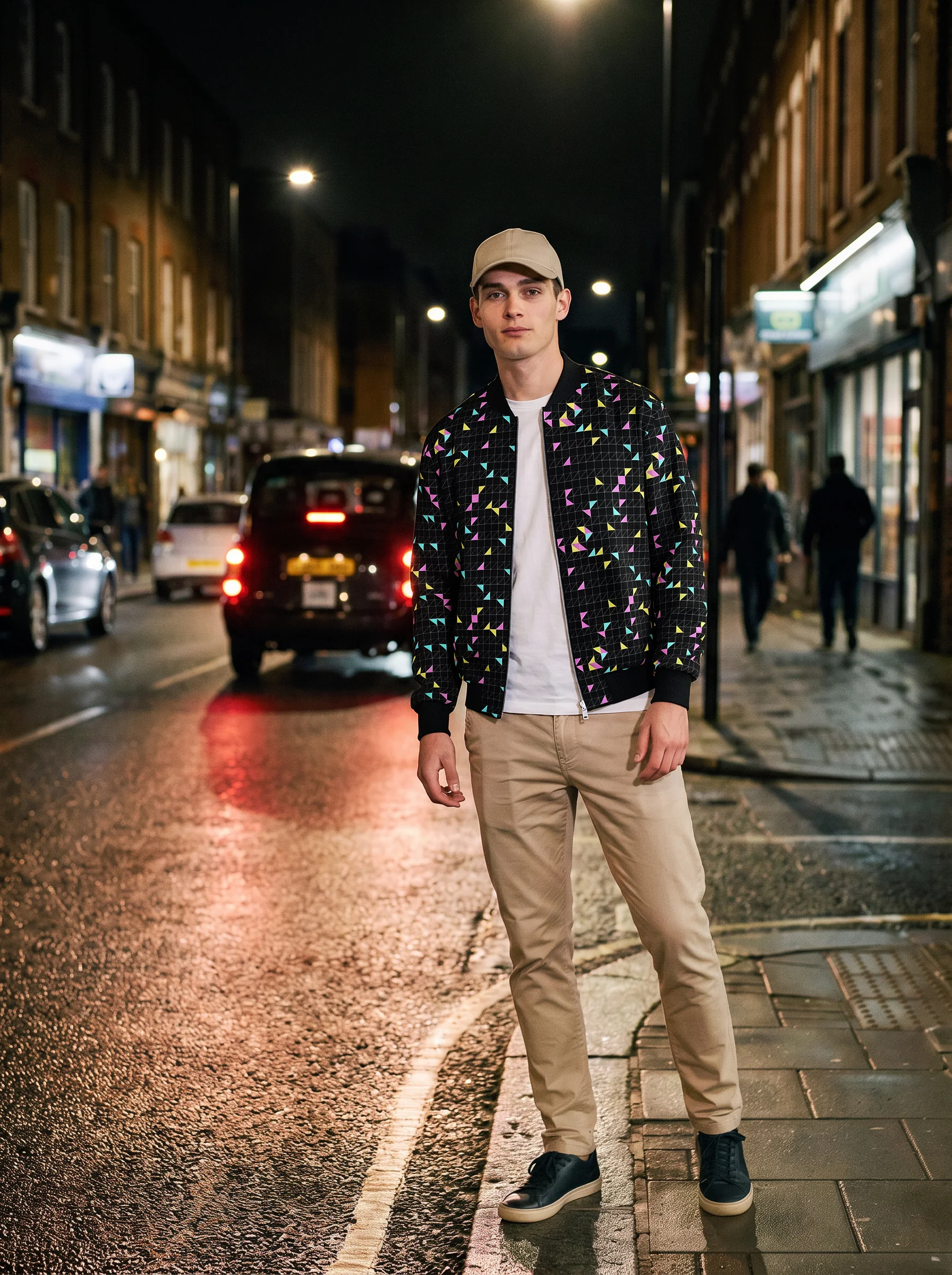
Cargo pockets. Chest straps. Technical fabrics borrowed from hiking and workwear. Gen Z has absorbed the gorpcore moment and made it permanent. Think Carhartt’s blue-collar legacy meets Arc’teryx’s practical-luxury crossover meets Japanese workwear brands like Descente and Nanga. This is clothing that signals readiness – for movement, for the outdoors, for whatever comes next. Simultaneously practical and deeply considered.
\n
Colour palettes here are earthy and restrained: khaki, slate, washed olive, concrete grey, off-navy. Not the neon utility of earlier streetwear cycles. Quieter. More considered.
\n
Tee translation: Chest pocket placement is everything. A small, precise graphic on the left chest feels intentional and workwear-adjacent. Think technical patch badges, topographic line art, or coordinate-style typography. Clean. Precise. Earthy palette. If you are printing a back hit, make it a technical diagram or topographic map rather than a slogan. The garment colour is doing most of the work here – let it.
\n
6. The Cultural Moments Driving the Looks
\n
TikTok gets credited with everything, but the cultural engine is more complex than one platform. Three distinct moments are converging right now and each one has direct design implications.
\n
Indie Sleaze is back – and this time, the people wearing it are too young to have worn it the first time. The aesthetic that peaked between 2008 and 2012 (American Apparel, flash photography, deliberately messy, Skins-coded chaos) is being rediscovered by Gen Zs with no personal memory of it. That distance is the point – it is pure aesthetic revivalism, free from the original cultural baggage. For tee design, this drives demand for grain, texture, grainy halftone prints, and deliberately lo-fi graphic choices. Think throwback photo tees with deliberately rough screen-print registration.
\n
The Sofia Coppola “girlhood” moment has sent a different current through the culture – a softer, more archival aesthetic running counter to aggressive bootleg energy but sitting alongside it comfortably. Washed pastels, delicate serif typography, quietly nostalgic imagery. This matters because it has expanded what reads as credible streetwear. The category is wider now than it has ever been.
\n
And beyond any platform, physical local scenes are feeding back in. Communities built around street art, independent music, and neighbourhood identity – the kind that generate their own visual language from specific places and specific moments – are producing more enduring design references than algorithm-driven trends. The most durable streetwear graphics tend to come from somewhere real. That is a content brief as much as it is a cultural observation.
\n
TikTok has dramatically compressed the trend cycle – styles that once took three years to travel from a Tokyo subculture to a London high street now do it in seventy-two hours. The opportunity is to lean into cultural moments fast. The trap is to chase every microtrend and lose the coherent brand voice that builds loyal repeat customers. Identify the deeper values underneath – authenticity, self-expression, anti-establishment energy, cultural fluency – and design from those roots. The individual trend will pass. The values behind it will not.
\n
Gen Z is not following streetwear’s rules – they are rewriting them in real time. Oversized silhouettes, bootleg remixes, typography as hero, gender-neutral defaults, utility aesthetics, and culture-driven moments are all expressions of the same underlying shift: clothing as identity declaration, not status performance. For anyone designing print-on-demand tees right now, the opportunity is enormous – provided you listen carefully, move with intention, and respect the cultural intelligence of the people wearing your work.
\n
Frequently Asked Questions
\n
Q: What are the key Gen Z streetwear trends right now?\nA: The dominant trends include oversized silhouettes, bootleg and remix aesthetics, bold typography in gothic, blown-out sans, and airbrush styles, gender-neutral styling, and utility and gorpcore-influenced pieces. These are united by a focus on authentic self-expression over brand status.
\n
Q: Why do luxury brands collaborate with streetwear designers?\nA: Younger consumers value cultural authenticity, comfort, and personal identity over traditional markers of luxury. Collaborations allow heritage brands to access credibility with Gen Z audiences who are otherwise sceptical of conventional luxury marketing.
\n
Q: How has TikTok changed streetwear trends?\nA: TikTok has dramatically compressed the trend cycle – styles that once took years to spread globally can now reach mass awareness within days. But platform algorithm trends are increasingly supplemented by physical local scenes and cultural revivals driven by generational rediscovery, like the current Indie Sleaze comeback.
\n
Q: What colour palettes are dominant in current Gen Z streetwear?\nA: Earthy, restrained palettes dominate – washed olive, concrete grey, bone white, rust, and off-navy. Sun-bleached and faded tones are particularly strong. Airbrush-influenced palettes are emerging alongside these – soft pastels fading into cream, coral dissolving into white – carried on vintage-washed garments.
\n
Q: What typography styles work best for Gen Z streetwear tees?\nA: Three directions are strong right now: distorted blackletter and gothic type for aggressive archival energy; blown-out condensed sans-serif pushing display fonts to their optical limits; and airbrush lettering with gradient fills and soft-focus effects. All three reward bold, restrained execution – one typeface, one colour, maximum contrast.
\n
Q: How should t-shirt brands respond to fast-moving streetwear microtrends?\nA: Rather than chasing every microtrend, identify the deeper values driving them – authenticity, self-expression, anti-establishment energy – and design from those roots. Trend-specific drops can work, but long-term brand coherence matters more than short-term relevance.
\n
Source: https://www.milanfashioncampus.eu/post/streetwear-fashion-youth-culture-gen-z
\n
This article was researched and written with AI assistance, then reviewed for accuracy and quality. Maya at Its.That. uses AI tools to help produce content faster while maintaining editorial standards.
\n