
\n
Last updated: May 29, 2026
\n
Using article:write to guide the expansion. The full brief is already provided – proceeding directly to the rewrite.
\n
\n
\nImage: Underrated Club
\n
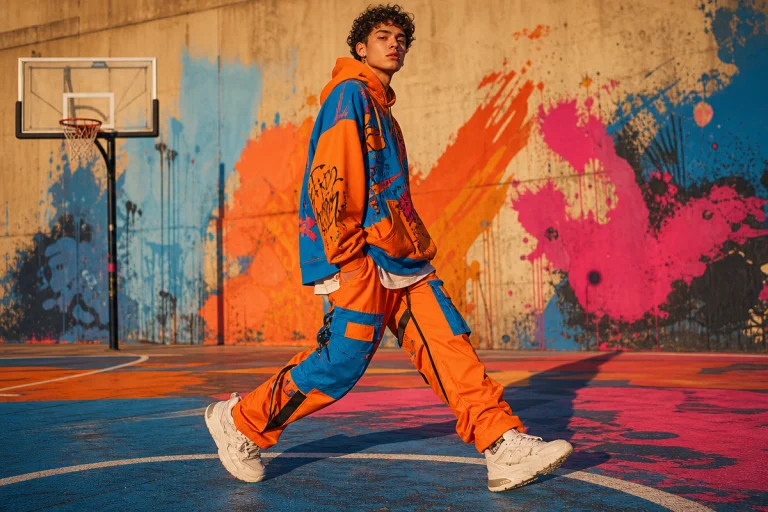
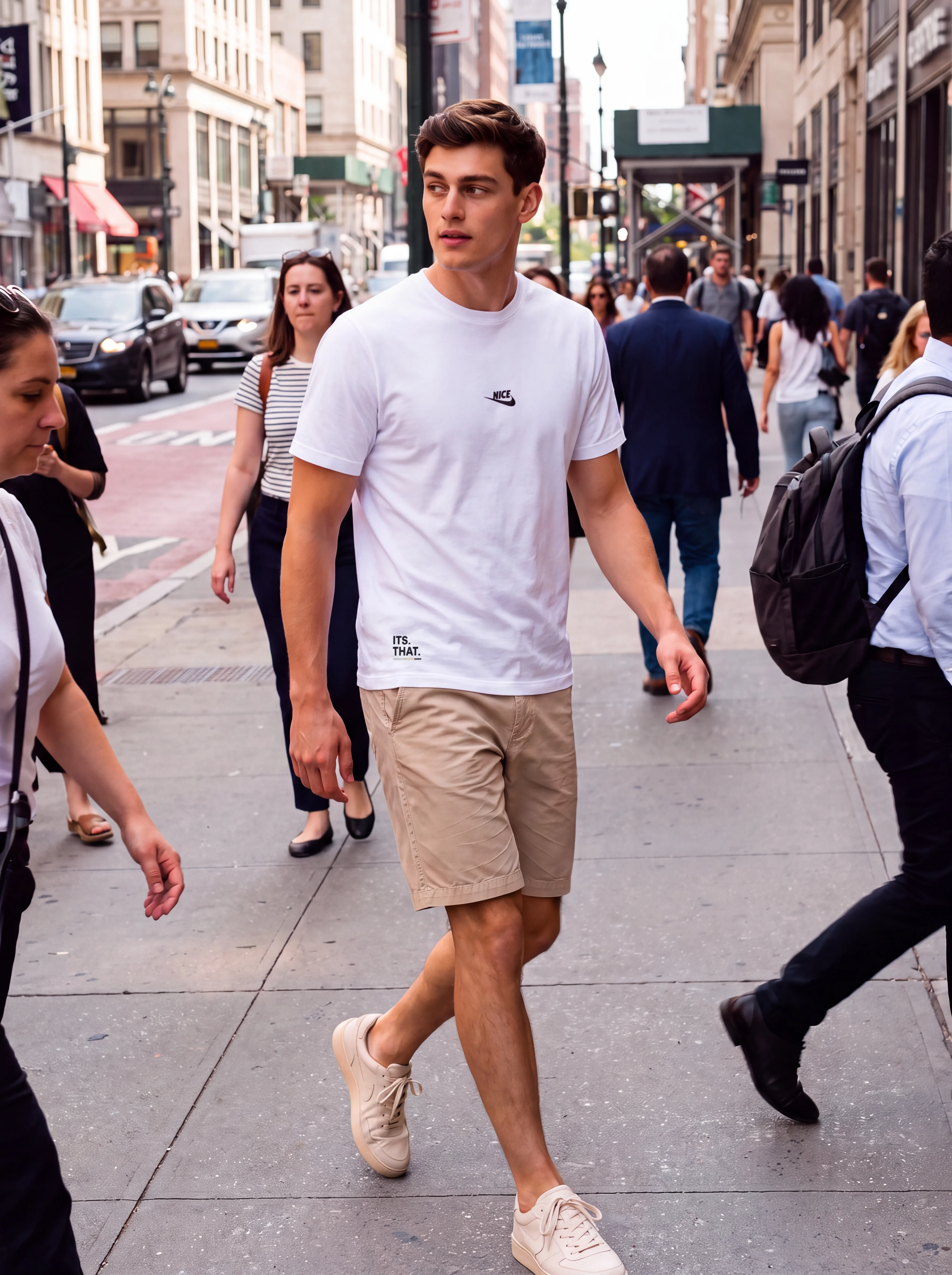
Scroll your feed for thirty seconds. Box-cut tees dropped past the hip, washed-out graphics barely holding their ink, lettering big enough to read from twenty feet away. On the street it is the same story – heavyweight cotton tees paired with loose cargos and beaten-up trail runners, the whole fit looking deliberately unconstructed. We are not watching a trend start. We are watching one fully land. The graphic tee market hit $28.87 billion in 2024 and is projected to reach $42.69 billion by 2032, and the oversized streetwear silhouette is the engine behind a significant slice of that growth. In 2026 this is the defining shape of men’s casual dressing.
\n
From Seoul’s Hongdae district to east London, the look is confident, expressive, and completely unbothered. The fitted tee and skinny jeans combination that dominated the early 2010s feels like a relic. What replaced it is looser, heavier, and loaded with visual language.
\n
How Graphic Tees Became the Most Expressive Piece in Men’s Wardrobes
\n
\n
\nImage: Underrated Club
\n
The graphic tee has always carried cultural weight. Band logos, album covers, skate brand graphics, hip-hop references – these were never just prints. They were declarations. That tradition stretches back through punk, hardcore, rave culture, and the early days of streetwear in the 1990s, when a bootleg rap tee from a market stall meant as much as a designer label. Our own Bootleg collection keeps that tradition going, with a different message under a familiar shape.
\n
What has shifted is the silhouette. For a long time, the prevailing logic was that a graphic tee needed a clean, fitted cut to let the design breathe. That logic has been dismantled. Heavyweight garment-washed cotton, boxy cuts with dropped shoulders, and faded or distressed prints are now the standard. The garment itself communicates as much as the graphic – lived-in versus pristine, analogue versus digital.
\n
Korean street style was the catalyst. Brands and stylists out of Seoul – particularly in the Hongdae and Sinchon scenes – popularised the extreme oversized fit several seasons before it hit Western mainstream retail. That influence has now fully permeated global streetwear. If we want to understand streetwear style outfits and accessories in 2026, the Korean-influenced oversized tee is the reference point we need first.
\n
Oversized Graphic Tees Streetwear: What the Key Design Trends Tell Us
\n
The dominant aesthetic in 2026 is not one single look – it is a set of parallel trends that all share the same underlying logic: personality over polish. A graphic tee can shift an entire outfit’s register with no additional effort. Baggy jeans and chunky sneakers with a faded vintage print tee? Effortless. That same tee layered under an open oversized flannel or beaten-up leather jacket? Fashion-forward. The versatility is exactly why searches for graphic tees for men keep climbing.
\n
Here is what we are tracking as the core design directions:
\n
Vintage-inspired prints with intentional degradation. Think sun-bleached tour merchandise meets 1990s college athletics – bootleg logo treatments, cracked-ink simulation, deliberately off-register colour separations. The print should look like it has lived a whole life before it reached the wearer. For print-on-demand execution, this means distressed halftone textures, simulated cracked-rubber ink, and split-register two-colour designs. Palette here sits in washed-out earth tones: faded terracotta, aged cream, dusty sage, and oxidised burgundy on heavyweight black or stone-washed grey bases. The imperfection is the point, and buyers are paying a premium for that quality of authenticity.
\n
Minimal typography graphics. A single word or short phrase in a bold condensed sans-serif – think Helvetica Neue Ultra Condensed or Impact-adjacent custom lettering – dropped large across the chest. No illustration, no secondary elements, just weight and scale. A washed-out off-white slogan on black heavyweight cotton is one of the sharpest executions of this right now. For POD, a full-width chest placement at roughly 30-32cm across is where this lives. The type does all the work. Colour palette is deliberately restrained: black on off-white, off-white on black, single-colour rust or forest green on natural. Think 1970s protest poster crossed with a New York downtown dive bar flyer.
\n
Anime and pop culture references – treated seriously. Not novelty prints, but considered graphic adaptations that treat source material with the same respect a band tee commands. Stylised panel crops, muted colour palettes drawn from the original print era (dusty indigo, warm yellow, faded red), typography in the style of Japanese source materials. These work best as large chest prints or statement back graphics, and the POD opportunity is in specificity: a niche series treated with genuine reverence will outperform a generic recognisable character every time. Think band merch seriousness applied to anime history.
\n
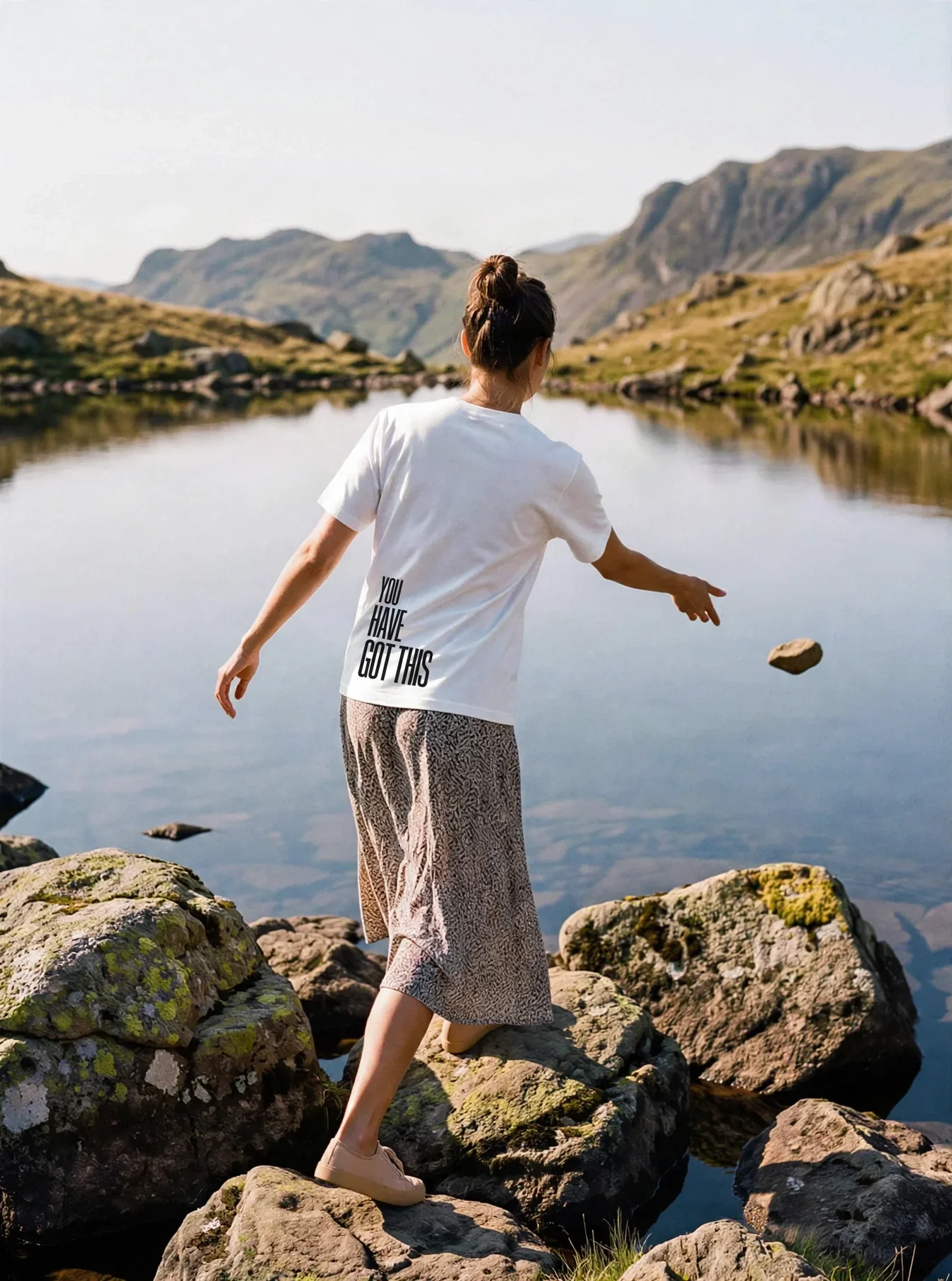
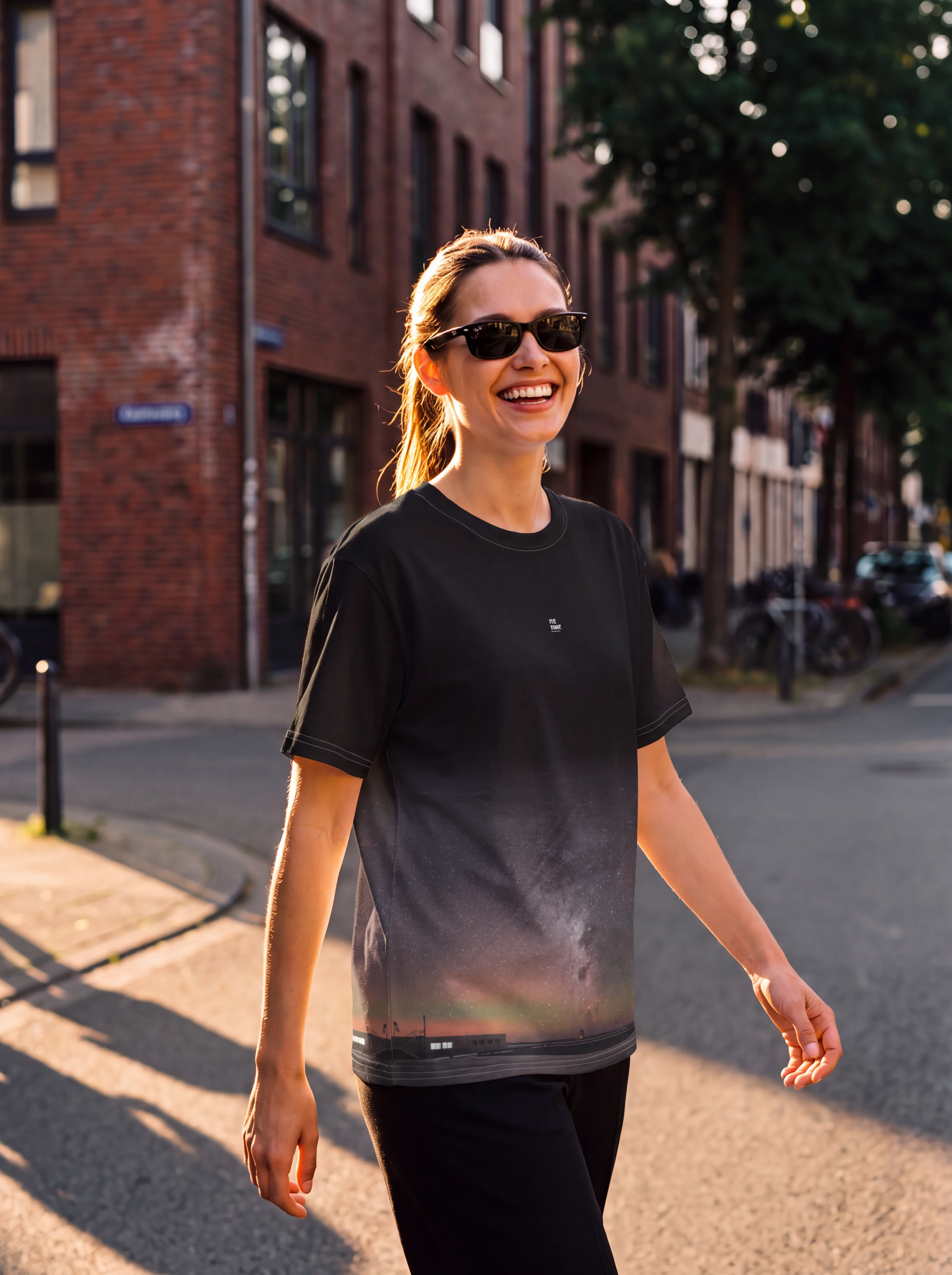
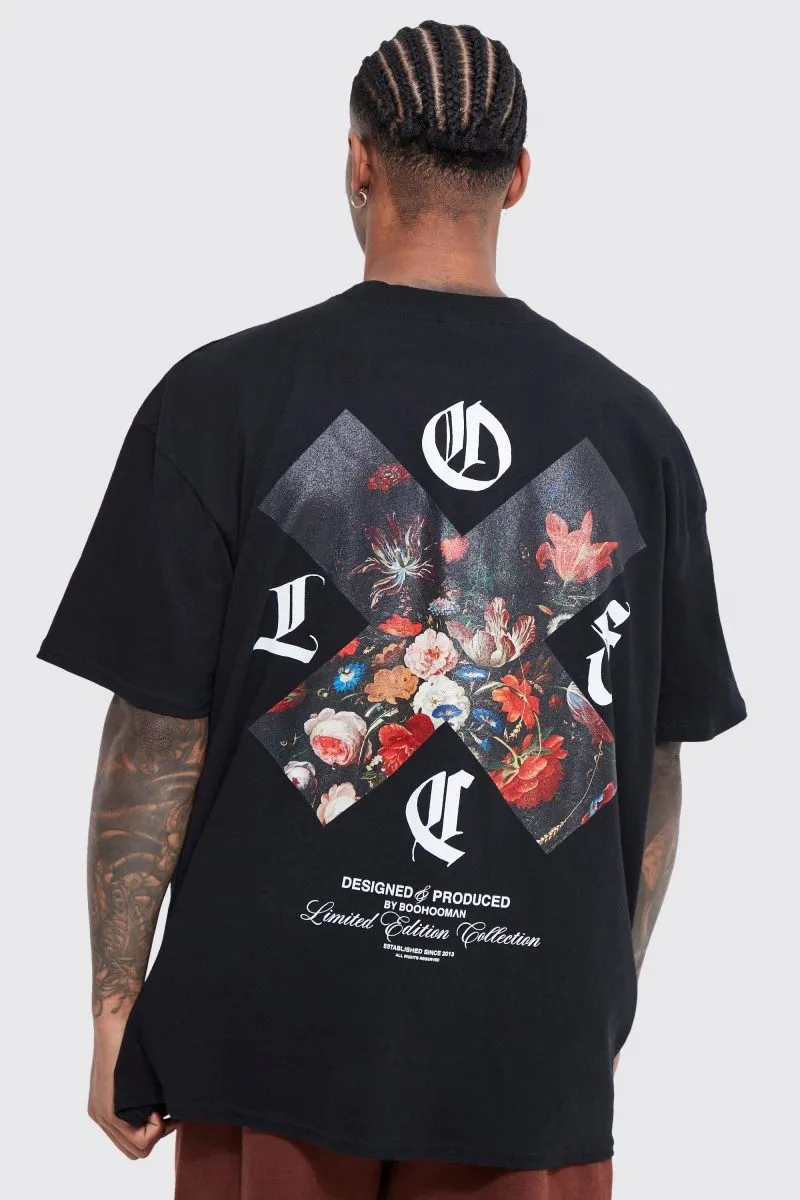
Back print graphics. The back has become prime real estate, and we cannot overstate this. An oversized tee worn with a loose shirt left unbuttoned exists to show off what is happening on the reverse. Large architectural graphics, text-heavy placements running vertical down the spine, and full-panel illustrations all benefit from the additional canvas. For POD, a full back placement starting below the collar and running to the hem rewards detail and scale in equal measure. Brands like Lonely Kids Club have understood the power of distinctive graphic language for over a decade – the back print amplifies that further. It is the whole idea behind our Positivity backprint tees: the wearer already knows the message, so the point is printed for whoever is walking behind them.
\n
Colour Direction: What We Are Actually Ordering
\n
Palette is where a lot of brands are still getting this wrong. We are not in a bright, saturated moment. The colour story across the oversized graphic tee market in 2026 runs consistently cooler and more muted than the previous cycle. The palette combinations we keep returning to:
\n
- \n
- Black base, off-white or aged-cream print – the most durable combination in this category, works across every design direction
- Stone or natural base, single-colour distressed print in earthy tones: terracotta, ochre, or forest green
- Washed grey base with two-colour vintage prints in dusty navy and faded red – the classic bootleg colourway
- Heavyweight white base with a cracked-ink black graphic – high contrast but still analogue in texture
\n
\n
\n
\n
\n
Avoid clean, bright process colours. If the ink looks like it came off a digital press untouched, it reads as wrong. The washed or cracked-ink finish is doing as much work as the design itself. Most POD platforms now support distressed texture overlays in the design upload – use them.
\n
Print Placement: Where the Design Actually Lives
\n
Placement is a design decision, not an afterthought. The oversized silhouette creates distinct zones that each carry a different visual register:
\n
- \n
- Full chest, centred (28-34cm wide): the primary statement placement, suits both typography and graphic-heavy designs
- Left chest hit (8-10cm): works as a secondary branding element, understated counterpoint to a dominant back print
- Oversized back (full panel): the prestige placement for 2026 – architectural text, large illustration, or vertical type running the full length
- Sleeve placement (upper arm): a secondary accent, works best with a single word or small logo mark
\n
\n
\n
\n
\n
Running a front chest graphic with a complementary back print is the combination we are seeing move most units. The front draws attention; the back rewards a closer look.
\n
Why This Silhouette Is Not Going Away
\n
The oversized graphic tee solves multiple problems at once. Comfortable without being sloppy. Expressive without requiring a complicated outfit. It translates across price points, from independent print-on-demand drops to high-fashion runway interpretations. And it fits the cultural mood of 2026 – a preference for personality and self-definition over aspirational polish.
\n
The relaxed fit carries no body-type assumptions. It reads as confident regardless of build, which is part of why the silhouette has resonated globally, absorbing influence from Seoul, Lagos, São Paulo, and London simultaneously. For anyone designing in this space, the opportunity is in specificity: particular subcultures, particular references, particular typographic voices. Generic does not cut through. Specific does.
\n
Back to that feed. The tees that stop the scroll in 2026 are not the loudest or the most technically impressive. They are the ones that feel like they mean something – that carry a reference, a texture, a graphic weight suggesting they come from somewhere real. The oversized silhouette gives the graphic room to breathe, the fabric room to age, and the wearer room to actually exist inside the garment. That is what the streets are telling us right now.
\n
Frequently Asked Questions
\n
Q: What makes oversized graphic tees different from regular graphic tees in 2026?\nA: The difference is in cut, fabric weight, and print treatment. Oversized graphic tees feature boxy, dropped-shoulder silhouettes in heavyweight cotton, with vintage-washed or distressed graphics rather than clean, sharp prints. The garment communicates as much as the design.
\n
Q: Which design styles are trending for oversized graphic tees in streetwear right now?\nA: The dominant trends are vintage-inspired distressed prints, minimal bold typography, anime and pop culture references treated with graphic seriousness, and back print graphics. All prioritise personality over polish.
\n
Q: How do you style an oversized graphic tee for a streetwear look?\nA: Pair with baggy jeans or cargos and chunky sneakers, or layer under an open oversized flannel or leather jacket. Keep everything relaxed and proportionally loose – the silhouette does most of the work.
\n
Q: What drove the popularity of oversized fits in men’s streetwear?\nA: Korean street style – particularly from Seoul’s Hongdae and Sinchon scenes – was the primary catalyst, popularising extreme oversized fits several seasons before they hit Western mainstream retail.
\n
Q: What should we consider when designing a graphic tee for print-on-demand in this trend?\nA: Specificity is essential. Choose a clear cultural reference or aesthetic voice, use distressed or halftone textures to simulate vintage wear, consider back-print placements for maximum impact, and design for heavyweight cotton where the garment texture is part of the overall aesthetic. Palette matters too – muted, washed earth tones and high-contrast black-and-off-white combinations are outperforming clean, saturated prints in this category.
\n
\n
This article was researched and written with AI assistance, then reviewed for accuracy and quality. Maya at Its.That. uses AI tools to help produce content faster while maintaining editorial standards.
\n