

\n
Last updated: May 31, 2026
\n
The skill is for writing articles from scratch – this task is an expansion/polish of an existing draft. I’ll follow the brief directly.
\n
\n
 \n
\n
\nImage: Creative Boom
\n
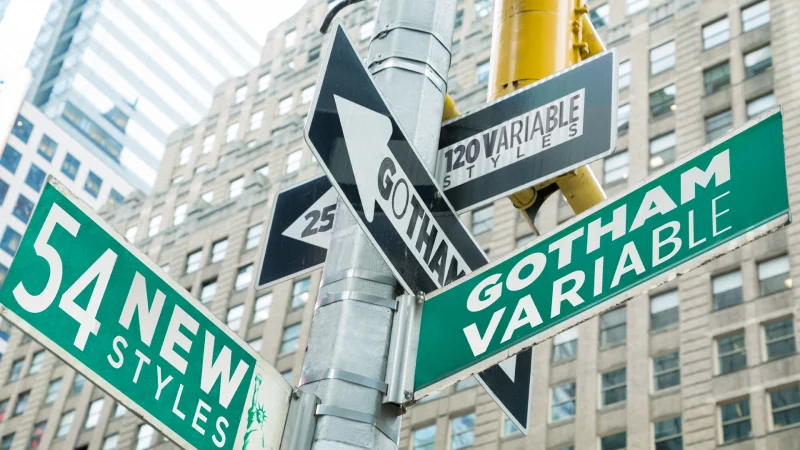
Scroll your feed right now and you will notice something shifting. The messy, expressive lettering that dominated streetwear graphics for the past three years – the brush scripts, the bubble letters, the handmade chaos – is giving way to something colder, more precise, more mechanical. Monospace grids are showing up on courier bags in Shoreditch. Fixed-width letterforms are bleeding across skate decks in Seoul. The terminal aesthetic has left the developer’s IDE and landed square on the chest of a drop tee. The typography trends 2026 are sending a clear signal: constraint is the new creative freedom.
\n
And then there is Gotham – yes, that Gotham – reborn at 25 and more powerful than ever. This is not a quiet month for type. This is a statement month.
\n
How Mechanical Type Became Streetwear’s Most Wanted Aesthetic
\n
 \n
\n
\nImage: Creative Boom
\n
The hunger for fixed-width, structured letterforms did not emerge from nowhere. Think brutalist architecture meets early internet nostalgia – the cold geometry of a typewriter ribbon colliding with the clinical precision of a Bloomberg terminal. Designers in the streetwear space have been circling this territory for a while, quietly pulling monospace fonts from open-source repositories and setting them in oversized blocks across tote bags and heavyweight tees. What May 2026 has delivered is the fine art version of what the streets were already doing.
\n
The thematic range across this month’s releases tells you everything about where type is heading. Inspiration sources include a 500-year-old Bible, a Times Square billboard, a twig found in a Swiss forest, and Spanish biscuits – a breadth that sounds absurd until you realise it points to one unified instinct: designers are done with the obvious. They are digging into material culture and historical artefacts to build letterforms that carry genuine weight.
\n
GT Mechanik – Three Tones, Infinite Tee Energy
\n
The release that deserves the closest attention is GT Mechanik from Grilli Type, designed by Shiva Nallaperumal, Reto Moser, and Noël Leu. This is not simply a monospace font – it is a typeface that treats fixed-width constraints as generative design principles rather than technical compromises. What sets it apart from the monospace fonts built for code editors is that it was built for designers who need fixed-width utility applied to something that actually performs at 200pt on a garment.
\n
GT Mechanik organises its design space into three tones: Mono, Semi, and Poly. Each expresses the same underlying logic at a different scale, and as you move along the axis, details like inktraps quietly dissolve – those angular notches cut into corners that help ink spread cleanly at small sizes. That is not just a technical footnote; it is a direct signal for how to deploy each tone on fabric.
\n
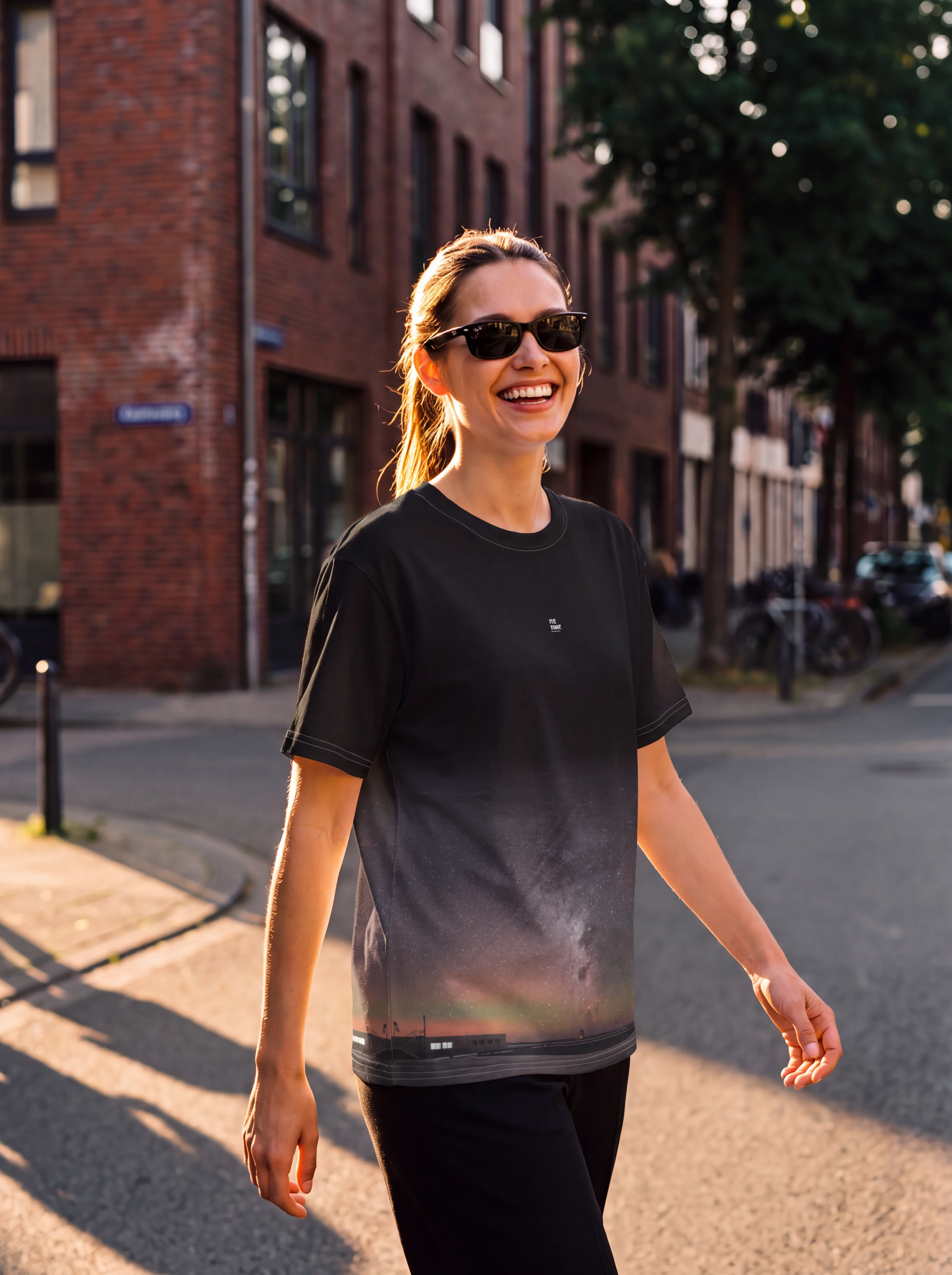
Run GT Mechanik Mono as a full-chest text block on washed black or raw navy 340gsm cotton. Single colour. White or bone ink, screen printed, no fill, no outline treatment. The dense fixed-width rhythm at large scale reads like a server log or a shipping manifest – cold, deliberate, and immediately legible from the back of a venue. Think Swiss precision meets East London zine culture. The intentional rigidity is the graphic.
\n
Shift to GT Mechanik Semi for a more editorial register – mid-weight wordmarks on heavyweight ecru or stone-washed sage, where the inktraps are still visible and add micro-texture at chest-badge scale. This is the tone that works as a sleeve or back-neck detail on an oversized silhouette, particularly if you want something that reads as considered rather than aggressive.
\n
GT Mechanik Poly softens the geometry enough to sit alongside photography or illustration without dominating – use it as a secondary headline on a split-register print, perhaps against a botanical or topographic background motif on a relaxed fit long-sleeve. The contrast between Poly’s softer rhythm and a harder visual element underneath is where it gets interesting.
\n
Gotham Variable – Twenty-Five Years and Still the Anchor
\n
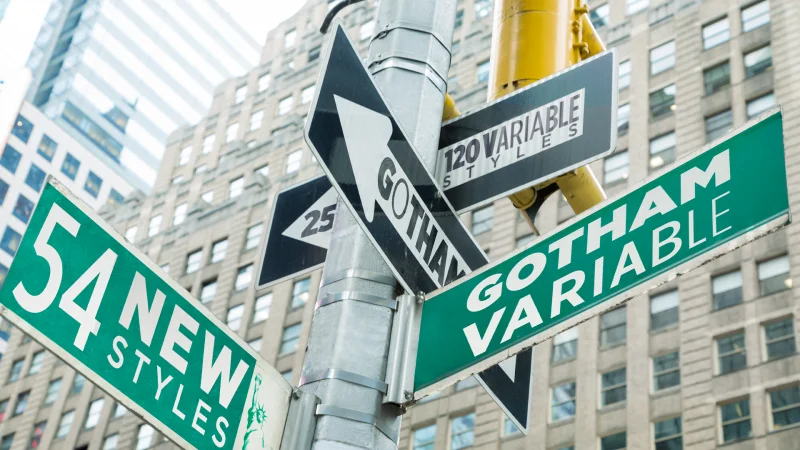
Tobias Frere-Jones designed the original Gotham in 2000 – it went on to appear on GQ covers, power the Obama presidential campaign, and anchor Netflix and Coca-Cola branding. To mark its 25th anniversary, Monotype has collapsed that enormous static family into a single variable file with continuous weight and width control, developed by Sara Soskolne. The new release brings 54 intermediate static styles, a new Compact width built for tight headline work, and expanded language support including Vietnamese alongside enhanced Cyrillic and Bulgarian.
\n
The Compact width is the one to reach for immediately. Stack it across a chest graphic in three tight lines – think bulletin-board typography at extreme negative leading, printed in a single discharge ink on a mid-weight charcoal or faded black tee. The compression creates visual density without losing legibility, which is exactly what you need when you are competing for attention at point-of-sale or on a flat-lay. Pair it with a thin rule above and below to frame the block, and you have a garment that reads as archival and contemporary simultaneously.
\n
For a global merch operation, the expanded language support is not a minor detail. One typeface that anchors your branding across Vietnamese, Cyrillic, and Bulgarian markets without requiring separate regional type decisions is a genuine operational advantage. Consistent brand expression across drops, regardless of geography, without compromise.
\n
If you have been building your visual language with AI-assisted editorial design systems, both GT Mechanik and Gotham Variable are technically clean enough to sit alongside AI-generated imagery without visual dissonance. The regularised geometry in each speaks the same structural language as diffusion-model outputs set at high detail – no friction, no visual fight.
\n
The Supporting Cast – And the Tees We Are Already Sketching
\n
May 2026 has more to offer beyond the two headline releases, and the secondary drops are sharper than the top line suggests.
\n
Dalton Maag’s Deiverson Ribeiro delivered a food-themed Brazilian script with jazz-like swagger – loose, confident, rhythmically unpredictable in a way that feels musical. The move here is a lifestyle tee on a sun-faded terracotta or baked clay colourway: the script as a single stacked wordmark down the left chest, no fill, outlines only, as if someone chalked it onto a café blackboard and it happened to be perfect. Contrast it against a utility sans in small caps for a secondary location detail and the whole thing snaps into focus.
\n
Sproviero’s Art Deco cuts deserve more attention than they are getting. The direction is sharp geometric revival – architectural verticals and decorative terminals pushed into contemporary proportion. Think high-fashion contrast: Sproviero at display weight as a centred chest headline on an elongated drop-shoulder silhouette, white on black, no secondary graphic, nothing competing with the letterform. Then use a stripped utility sans at 7pt for the small-print branding underneath. The gap between those two type registers – ornate above, bare below – is where the tension lives. That tension is what makes people stop scrolling.
\n
A botanical display font from Switzerland rounds out the month and is worth noting for sleeve or hem placement: intricate naturalistic letterforms at small scale become a mark of quality on a garment, the kind of detail that rewards close inspection and signals craft in a way that a larger graphic cannot.
\n
The Call
\n
Monospace-locked text blocks in a single discharge ink on heavyweight cotton. Gotham Variable Compact in extreme tight leading for a stacked bulletin-board chest graphic. Art Deco revival with Sproviero as headline weight against a stripped utility sans for secondary text. These are not directions – they are already the tees. The mechanical, grid-locked letterforms spreading across every platform right now are the logical endpoint of a decade that started obsessed with imperfection and has slowly, methodically fallen back in love with structure.
\n
Design to the typeface that still looks right on a five-year-old tee at a vintage market. In May 2026, those typefaces just arrived.
\n
Source: https://www.creativeboom.com/resources/the-best-new-typefaces-for-may-2026/
\n
This article was researched and written with AI assistance, then reviewed for accuracy and quality. Maya at Its.That. uses AI tools to help produce content faster while maintaining editorial standards.
\n