
Last updated: June 5, 2026
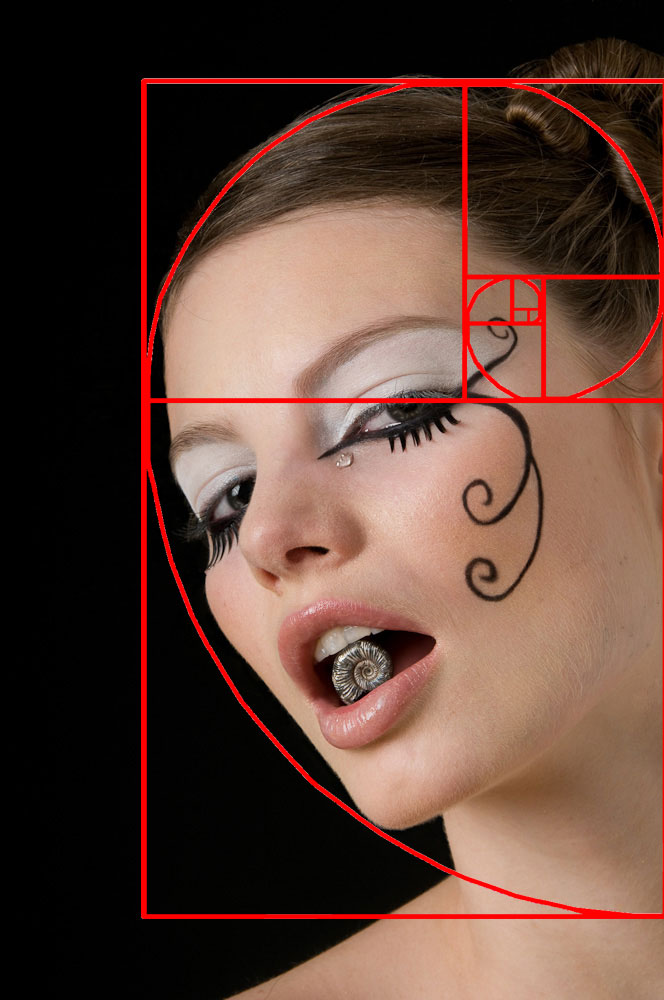
Image: The Phoblographer / Chris Gampat
Picture this. A coastline path curves through sea grass, winding toward a distant lighthouse. The light is golden, the hour late. The path enters the frame at the lower left, arcs upward and to the right, then tightens inward until the lighthouse sits at the innermost coil of an invisible spiral – not centred, not quite at the rule-of-thirds intersection, but somewhere more precise. We look at this photograph and feel something move inside us. Forward momentum. A sense that the earth itself is breathing.
This is what golden spiral photography composition does that the rule of thirds alone cannot fully replicate: it gives a still image a sense of organic, living energy. And most photographers have never been shown how to use it.
Why the Rule of Thirds Is Only Half the Story
Image: The Phoblographer / Chris Gampat
The rule of thirds is accessible, effective, and a genuine improvement on centred compositions. But it is a recent invention relative to the history of visual art. The Golden Proportion – the mathematical relationship that underlies the spiral – has been embedded in discussions of art and architecture for centuries. Some art historians argue that structures as old as the Parthenon were proportioned according to relationships that approximate Phi, though those specific claims remain debated among scholars. What is less contested is that Renaissance artists were deeply interested in mathematical proportion as a framework for beauty.
The Golden Spiral derives from an irrational number called Phi (φ ≈ 1.618), which is intimately linked to the Fibonacci sequence: 0, 1, 1, 2, 3, 5, 8, 13, 21, 34, 55, 89, 144 – each number the sum of the two before it. As the sequence grows, the ratio between consecutive numbers converges on Phi. Draw squares with side lengths following that sequence, trace an arc through the corner of each square, and we produce a logarithmic spiral. That is the Golden Spiral.
Leonardo da Vinci, who collaborated with mathematician Luca Pacioli on De Divina Proportione, is closely associated with deliberate use of the golden ratio in visual composition. Michelangelo and Raphael have similarly attracted scholarly attention for compositional choices that align with Phi – though whether these were conscious mathematical decisions or intuitive aesthetic ones is a question art historians continue to explore. What we do know is that these works feel inexhaustible: the composition leads the eye rather than merely pointing it at a destination.
The rule of thirds is, in a sense, a simplified and accessible approximation of something older and more complex. Both are useful. Neither is complete without the other.
How Golden Spiral Composition Works in Your Frame
The Golden Spiral places one element at the innermost coil – the tightest point – while the rest of the image radiates outward from it. The viewer’s eye enters along the widest arc, follows the curve inward, and arrives at the focal point having experienced the entire frame on the way. The difference from the rule of thirds is subtle but felt: the spiral gives an image directionality, as though time is moving through it.
Here is the myth that deserves correcting. Many photographers treat the golden spiral as an advanced replacement for the rule of thirds – something we graduate to. In reality, an image that satisfies one framework will very often satisfy the other as well. The two are complementary, not competing. Think of the rule of thirds as our pencil sketch and the golden spiral as the refined final drawing – one informs the other.
To use it practically, we do not need specialised equipment. Adobe Lightroom includes a built-in Golden Spiral overlay in its crop tool. Press O while in crop mode to cycle through the available grid overlays. Press Shift+O to rotate and flip the spiral into any of four orientations. Find the orientation that places the innermost coil over our intended focal point – a face, a flower centre, a product detail – then adjust the frame. The tool does the geometry; we do the looking.
For phone photographers, the same principle applies. Composition lives entirely in how we see and how we crop. Lightroom Mobile carries the same overlay feature. Photograph the subject, then reframe in post until the spiral aligns with the element we most want the eye to rest on.
A Repeatable Workflow Across Three Scenarios
Knowing the theory is one thing. Building it into muscle memory is another. Here is how we apply the spiral across the three situations we encounter most often.
Portraits. When photographing a person, identify the natural arc the scene already offers – a turning shoulder, the line of a jaw, the curve of an arm. In Lightroom, open the crop tool, press O until the spiral appears, then press Shift+O to rotate it until the innermost coil sits over the eye nearest to the camera. A 50mm equivalent focal length tends to work well here: close enough to render the face with presence, wide enough to include the environmental curve that leads the eye inward. If we are shooting with available light, position the subject so that the light source – window, reflector, or open sky – falls from the side that the spiral’s widest arc opens toward. That way, the gradient from highlight to shadow follows the curve of the composition rather than cutting across it. The eye path and the light path reinforce each other.
Landscapes. Natural scenes offer the richest material. Rivers, roads, fences, and shorelines all carry inherent curvature. Before we frame the shot, we walk the location and look for the existing arc – the feature whose widest sweep can enter our frame on one side and whose narrowest point is where we want attention to rest. A wide focal length, somewhere between 16mm and 35mm equivalent, gives us room to let the foreground sweep occupy the full breadth of the spiral. For colour reinforcement, warm tones advance toward the viewer while cooler tones recede. Placing warm elements – golden grass, sunlit rock, a terracotta wall – at the innermost coil and cooler, shadowed tones along the wider arc amplifies the sense of the eye being drawn forward. Contrast works the same way: higher local contrast at the focal point, softer tones radiating outward. In Lightroom, a radial gradient centred on the innermost coil, with a modest clarity and dehaze boost inside and a slight reduction outside, reinforces the spiral optically without making the edit visible.
Phone photography. The phone is our fastest sketchbook for training the eye. Shoot freely in the moment, worrying less about perfect composition in-camera and more about capturing the curve you can see. Then crop in Lightroom Mobile: open crop, press the overlay button, cycle to the golden spiral overlay, and rotate until the innermost coil aligns with the focal point. The discipline is in the review, not the shot. Over time we find ourselves pre-visualising the spiral before we raise the phone – which is precisely the point.
What Changes When We Start Composing This Way
Images structured along the golden spiral tend to project energy, motion, and dynamism in a way that static grid compositions rarely achieve. This is likely because the logarithmic spiral appears persistently throughout nature – in the cross-section of a nautilus shell, in the seed patterns of a sunflower, in the arrangement of pinecone scales, and in the spiral arms of galaxies. The human eye may have evolved to find this shape inherently familiar, even reassuring, despite the sense of movement it produces. We recognise it as the shape of growth itself.
Alongside lighting and colour, composition is one of the primary tools we have for directing a viewer’s attention. The golden spiral does not merely say “look here” – it says “travel here, via this route, and arrive.” That is a fundamentally different experience for the person looking at our work.
For those extending their visual practice into generative image-making, it is worth noting that Master How to Generate Photos with AI in 2026 covers how compositional language – including spiral-based framing – can influence AI-generated imagery. Tools like ComfyUI, for which there is a complete installation guide available here, allow for finer control over generated compositions once we understand the underlying principles of how visual attention is structured.
The practice reward is cumulative. Train the eye long enough with the overlay, and we begin to see the spiral before we reach for the crop tool. We feel it in the viewfinder – in the way a road curves through a valley, in the way a conversation between two people at a café creates an implied arc across the table.
Go back to that coastline photograph. The path. The lighthouse. The sea grass bending in wind we cannot hear. Now we know why it moves us. The spiral was always there – in the curve of the path, in the geometry of the frame, in the ancient mathematics of visual attention that Renaissance painters encoded in stone and pigment long before the camera existed.
We did not invent this way of seeing. We are only remembering it.
Frequently Asked Questions
Q: What is golden spiral photography composition?
A: Golden spiral photography composition is a framing technique that positions your subject at the innermost coil of a logarithmic spiral derived from the mathematical constant Phi (φ ≈ 1.618). It guides the viewer’s eye along a curving path through the entire frame before arriving at the focal point, giving the image a sense of energy and directional movement.
Q: How does the golden spiral differ from the rule of thirds?
A: The rule of thirds divides the frame into a three-by-three grid and places subjects at intersection points. The golden spiral adds directionality – the viewer’s eye travels a curved route inward toward the focal point rather than simply landing on it. The two techniques are complementary; many images that satisfy one will also satisfy the other.
Q: How do I access the golden spiral overlay in Adobe Lightroom?
A: In Lightroom’s crop tool, press O to cycle through the available grid overlays until the golden spiral appears. Press Shift+O to rotate and flip the spiral into different orientations. Position the innermost coil over your focal point, then adjust the crop accordingly. Lightroom Mobile includes the same feature for phone workflows.
Q: Does the golden spiral technique work for phone photography?
A: Yes. Composition is independent of the camera used. Shoot on your phone, then reframe using Lightroom Mobile’s crop tool and golden spiral overlay in post-processing. The technique lives in how you see and how you compose – not in your hardware.
Q: Where does the golden spiral come from historically?
A: The Golden Proportion underlying the spiral has been discussed in the context of art and architecture for centuries, with scholars closely associating it with Renaissance masters including Leonardo da Vinci. Its pervasiveness in nature – nautilus shells, sunflower seeds, galaxy arms – may explain why compositions based on it feel instinctively right to the human eye.
This article was researched and written with AI assistance, then reviewed for accuracy and quality. Talulah Menser uses AI tools to help produce content faster while maintaining editorial standards.